
What to Expect at Your Hearing Test and How to Get Ready
If you’ve ever wondered if your hearing is as sharp as it could be, a hearing test gives you clear answers about your hearing health. A hearing test evaluates how well you can hear different sounds and helps detect early signs of hearing loss. This quick check can clue you in to changes in your hearing before they start to affect your daily life.
You may not notice gradual changes, but early detection can make a big difference. Simple, convenient online hearing tests now let you screen your hearing in just minutes from home. If you have concerns about your hearing or just want peace of mind, taking a test is a smart decision.
Understanding Hearing Tests

Hearing tests are used to check how well you hear different sounds, tones, and words. They also help audiologists find out the type and amount of any hearing loss you may have.
What Is a Hearing Test?
A hearing test is a set of checks done to measure how well you can hear at different pitches and volumes. You will usually sit in a quiet room wearing headphones or soft ear tips. The test uses beeps, tones, and spoken words to see how well each ear works.
The person giving the test, called an audiologist, may also use tools to see how your eardrum and middle ear respond to sound. This helps find out if there is any blockage or damage in your ear. After the test, your results will be shown on a chart called an audiogram.
Today, you can also try an online hearing test, but these are not as accurate as in-person exams.
Purpose and Importance of Hearing Tests
Hearing tests show if you have hearing loss, how much hearing is lost, and which ear is affected. There are different degrees of hearing loss, ranging from mild to profound. Even a small loss can make speech harder to understand, especially in noisy places.
Regular tests can catch problems early, even before you notice symptoms. Early detection helps prevent more serious issues and improves your quality of life. Hearing loss can affect your learning, work, and social life. For those with hearing aids, regular tests help check if the device is still working well.
Getting a hearing test is the most important step in detecting and measuring hearing loss.
Types of Hearing Tests
There are several types of hearing tests. The most common is pure-tone testing, where you hear tones at different pitches and volumes. Another type is speech testing, where you repeat words to see how well you understand speech.
Some tests measure how your eardrum moves or how sounds are passed through the middle ear. These are called tympanometry and acoustic reflex tests. Young children may have different testing methods, such as listening for sounds and watching for a response.
A simple hearing screening is used to see if you need more detailed tests. You can learn more about how hearing tests are done and what happens during an appointment.
Hearing Test Procedures and Methods
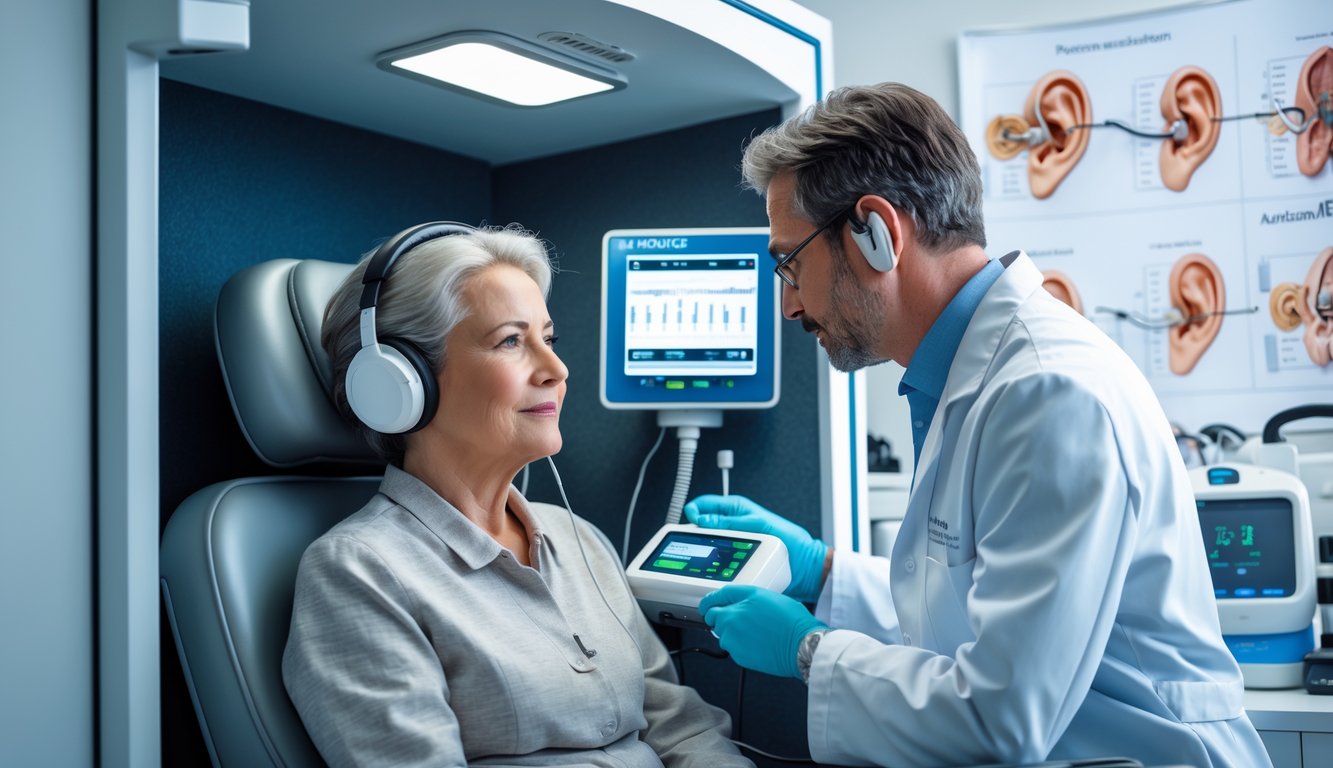
Several tests are used to evaluate hearing ability, and each method checks different parts of your hearing system. These methods can help identify hearing loss in adults, children, and newborns.
Pure-Tone Audiometry
Pure-tone audiometry is one of the most common hearing tests. During this test, you wear headphones and listen to a series of tones at different pitches and volumes. You’ll be asked to respond every time you hear a sound, even if it’s very soft.
This test helps your hearing specialist find the quietest sounds you can hear at various frequencies. Results are recorded on an audiogram, which shows your hearing ability in each ear. Pure-tone audiometry is reliable for both adults and children over five. It can also detect if you have mild or severe hearing loss across different pitches, making it a good choice for most standard hearing evaluations. You can learn more about the process of pure-tone testing.
Auditory Brainstem Response Testing
Auditory brainstem response (ABR) testing checks how well the hearing nerve and brain pathways respond to sound. Small electrodes are placed on your head, and you listen to a series of clicking sounds through earphones. The electrodes measure your brain’s electrical activity in response to the sounds.
ABR is used if you can’t respond to a regular hearing test, such as with young children, infants, or people unable to cooperate. It helps detect hearing loss caused by problems with the inner ear or hearing nerve. This test is often part of newborn hearing screening in hospitals because it gives reliable results without needing any response from you. ABR does not require you to be awake or active during the test.
Otoacoustic Emissions Testing
Otoacoustic emissions (OAE) testing checks how well the inner ear, especially the cochlea, is working. During this test, a tiny probe is placed in your ear canal. The probe plays soft sounds and records any echoes that come back from the ear. These echoes are called otoacoustic emissions.
If your inner ear is healthy, the probe will detect these emissions. If there is hearing loss, especially from inner ear damage, there won’t be any echoes. OAE testing is quick, painless, and safe, making it a popular choice for newborn hearing screening. It can also confirm results from other hearing tests, especially when sensory hearing loss is suspected. This method identifies both mild and moderate hearing issues without requiring any conscious response.
Interpreting Hearing Test Results

A hearing test helps check how well you hear sounds of different loudness and pitches. Understanding your hearing test results is important for making health decisions.
How to Read Hearing Test Results
Your hearing test results are shown on a chart called an audiogram. The vertical axis shows the volume, which is measured in decibels (dB), and the horizontal axis shows the pitch or frequency, in hertz (Hz). Normal hearing is usually between 0 and 25 dB across all frequencies.
Each ear is measured separately. Symbols like “O” and “X” mark your right and left ear. Results below 25 dB may show some degree of hearing loss, which can be mild, moderate, severe, or profound. There are also different types: sensorineural, conductive, and mixed.
Your word recognition score (WRS) is important, too. This score shows how well you understand speech. Scores above 90% are considered excellent, while scores below 70% may mean trouble understanding even with louder sound. For more details on reading audiograms, you can visit this guide to reading an audiogram.
Next Steps After a Hearing Test
If your test results show normal hearing, no immediate action is needed. If you have hearing loss, your next steps depend on the type and amount of loss. A specialist may suggest more tests to find the cause.
Possible recommendations include hearing aids, medical treatment, or learning new ways to communicate. For some, regular monitoring is important because hearing can change over time. You can learn more about the process and what to do after your hearing test by reading this detailed overview on audiogram interpretation.
Keeping copies of your hearing test results and following up with your provider is key to managing your hearing health.
Impacts of Hearing Loss and Early Detection

Hearing loss can make it harder for you to connect with others and learn new things. Early detection and treatment help lower the risks of delays in language, social skills, and learning.
Effects on Communication and Daily Life
When you have hearing loss, it becomes hard to follow conversations, especially in noisy places. Everyday sounds like doorbells, alarms, or even voices may seem distant or unclear. This can lead to frustration, misunderstandings, and withdrawing from group activities.
Children who do not get early hearing tests may face bigger language delays. Hearing is crucial for picking up new words and learning how to make sounds correctly. According to research, children with untreated hearing loss can have problems with speech development and reading skills.
Recognizing hearing loss early can help you or your child get the support needed. Tools like hearing aids and therapy can make it easier to communicate and keep up in school or work. Hearing tests allow for quicker action before the loss impacts daily routines.
Hearing loss can affect your social skills because you might avoid joining conversations or group settings. This isolation can lower confidence and make it harder to make friends. Young children are especially at risk for these social challenges if hearing loss is not found early.
Early detection is vital because missing out on sounds during the first months of life can cause long-term effects on social and cognitive development. According to medical experts, infants who do not get timely screening and treatment may struggle with communication, literacy, and even memory.
Quick recognition and early intervention give you a better chance to develop strong social skills and avoid delays in learning. Early support also makes daily interactions more comfortable and less stressful.
Frequently Asked Questions

Costs, testing options, and what to expect at an appointment are common concerns when it comes to hearing tests. Knowing how to recognize possible signs of hearing loss and where to go for help makes it easier to protect your hearing health.
How much does a professional hearing test cost?
A professional hearing test can cost anywhere from $60 to $250 in most locations. Some basic screenings may be free at clinics or community events, but a full diagnostic exam is more thorough and usually has a higher cost. Check with your health insurance, as some plans cover part or all of the expense.
Are there reliable online tests available to check hearing abilities?
Online hearing tests can give a general idea about your hearing but are not as accurate or thorough as tests done by a specialist. These online tools may help you decide if you need to see a professional, but they cannot diagnose a specific condition. In-person exams use equipment and controlled settings that online tools do not match. Some frequently asked questions about hearing tests point out these differences.
What is the typical frequency range tested during a hearing examination?
Most hearing tests check your ability to hear sounds between 250 Hz and 8,000 Hz. This range covers the frequencies important for understanding normal speech. Hearing above or below these frequencies is less common, so tests focus on this main range.
What types of hearing tests are most commonly used by audiologists?
Pure-tone audiometry is the most common test and measures how softly you can hear tones at different pitches. Speech audiometry checks your ability to hear and understand spoken words. Audiologists may also use tests like tympanometry to look at how well your middle ear moves and otoacoustic emissions to check inner ear function. A hearing test often includes more than one of these exams.
Where can I find a certified center for a hearing test near me?
You can find certified hearing test centers by searching online health directories, asking your primary care provider, or visiting trusted medical websites. Look for locations that mention licensed audiologists or certified hearing professionals. Reading patient reviews also helps you choose a reliable center.
What are the common signs that might indicate a loss of hearing?
You may notice you have trouble following conversations, especially in groups or noisy places. Frequently asking others to repeat themselves, turning up the volume on devices, or feeling like people are mumbling can also be warning signs. More details about these signs are listed in common questions about hearing loss.